New £4.5m partnership to tackle neglected tropical diseases
- News
1 October 2026
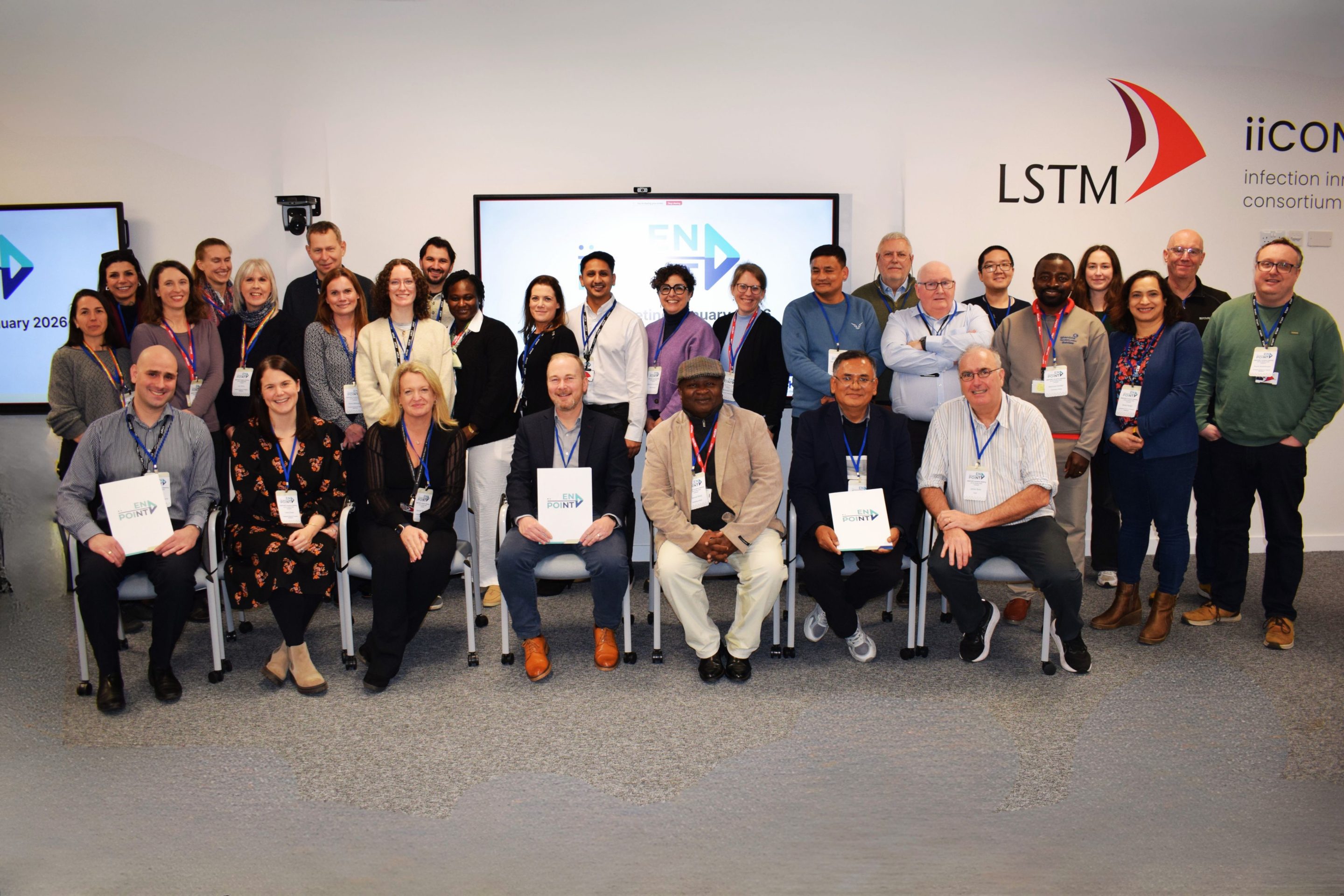
Liverpool School of Tropical Medicine (LSTM) has announced a new partnership to develop innovative, acceptable and feasible tools to accelerate progress towards eliminating two neglected tropical diseases (NTDs).
ENDPOINT (rEsearch aNd DeveloPment fOr elimInation of NTds) is a major UK aid-funded initiative coordinated by LSTM’s Centre for Drugs and Diagnostics and Centre for Neglected Tropical Diseases, working with the LSTM-led Infection Innovation Consortium (iiCON) and The Leprosy Mission in Nepal, University of Buea, Cameroon and University of Bonn in Germany.
The programme focuses on the filarial parasitic infections lymphatic filariasis and onchocerciasis. Together these debilitating diseases affect an estimated 78 million people, with a further one billion at risk, causing major health problems and significantly undermining economic prosperity in endemic communities.
As a cross-disciplinary product development partnership (PDP), ENDPOINT will advance a pipeline of innovative diagnostic and treatment tools, while generating evidence on their acceptability and feasibility within affected communities and health systems, as well as potential policy and regulatory pathways.
UK aid funding
The £4.5m project is funded by UK aid through the UK Government’s Foreign, Commonwealth and Development Office (FCDO) as part of the Global Research and Technology Development fund, launched earlier this year, which supports PDPs like ENDPOINT to tackle global challenges like neglected tropical diseases.
Professor Joseph Turner, co-director of the Centre for Drugs and Diagnostics and research director of the PDP, said: “We are immensely grateful for this valuable FCDO investment in our CDD iiCON filarial NTDs product development portfolio.
“With our partners in Nepal and Cameroon, our pipeline of innovative diagnostic and therapeutic candidates have been selected to overcome specific barriers to lymphatic filariasis and onchocerciasis elimination.
“We will evaluate candidate product effectiveness and acceptability by affected communities in order to refine and accelerate their onward development.”
Project focus
ENDPOINT brings together a portfolio of complementary projects:
- a wearable microwave biosensor diagnostic to support non-invasive detection and surveillance of lymphatic filariasis in Nepal;
- repurposing the oral antibiotic fusidic acid as a shorter-course treatment for onchocerciasis (the second leading infectious cause of blindness worldwide), complementing the LSTM-led FAME study;
- early development of a new class of fast-acting anti-Wolbachia drug candidates in the UK, with the potential to treat or prevent onchocerciasis, lymphatic filariasis and veterinary zoonotic filariasis.
Dr Rachael Thomson, Endpoint CEO, said: “To receive this funding is a real achievement for ENDPOINT and LSTM. This investment strengthens the global research pipeline for NTDs and reinforces our commitment to delivering equitable, impactful solutions for affected communities.”
By combining cutting-edge technologies with strong in-country partnerships, ENDPOINT aims to generate high-quality evidence, support and de-risk the development of scalable solutions that are acceptable to communities and health systems, and strengthen national research and development capacity in endemic countries.
Filarial NTD elimination investment
FAME is a complementary clinical trial funded by a £4.9 million award from the European and Developing Countries Clinical Trials Partnership (EDCTP3), with additional support from the Drugs for Neglected Diseases initiative (DNDi).
The study is generating critical evidence on the potential of repurposing the antibiotic fusidic acid to treat onchocerciasis and support the future uptake of antibiotic-based tools for filarial disease elimination.
Together, ENDPOINT and FAME represent nearly £9.4 million in new investment reaffirming LSTMs long-standing leadership in research and development to progress filarial NTD elimination.
Find out more about research and innovation at LSTM.
Related articles



Related courses

MSc Tropical Medicine and Clinical Research
Develop expertise in tropical medicine and the skills to evaluate and contribute to clinical research.
View course
Master of Public Health – Global Health (on campus)
Build the skills to understand global public health challenges and improve health through evidence, policy and practice.
View course
Master of Public Health – Global Health (Online)
Explore global public health challenges and develop practical skills through flexible online study.
View course
MRes Tropical Health and Infectious Disease Research (January)
Develop advanced research skills while investigating important questions in tropical health and infectious disease.
View course