MSc One Health in Tropical and Infectious Disease *
Explore the connections between human, animal and environmental health, and develop the research skills to understand and tackle infectious diseases.
* subject to validation
Apply now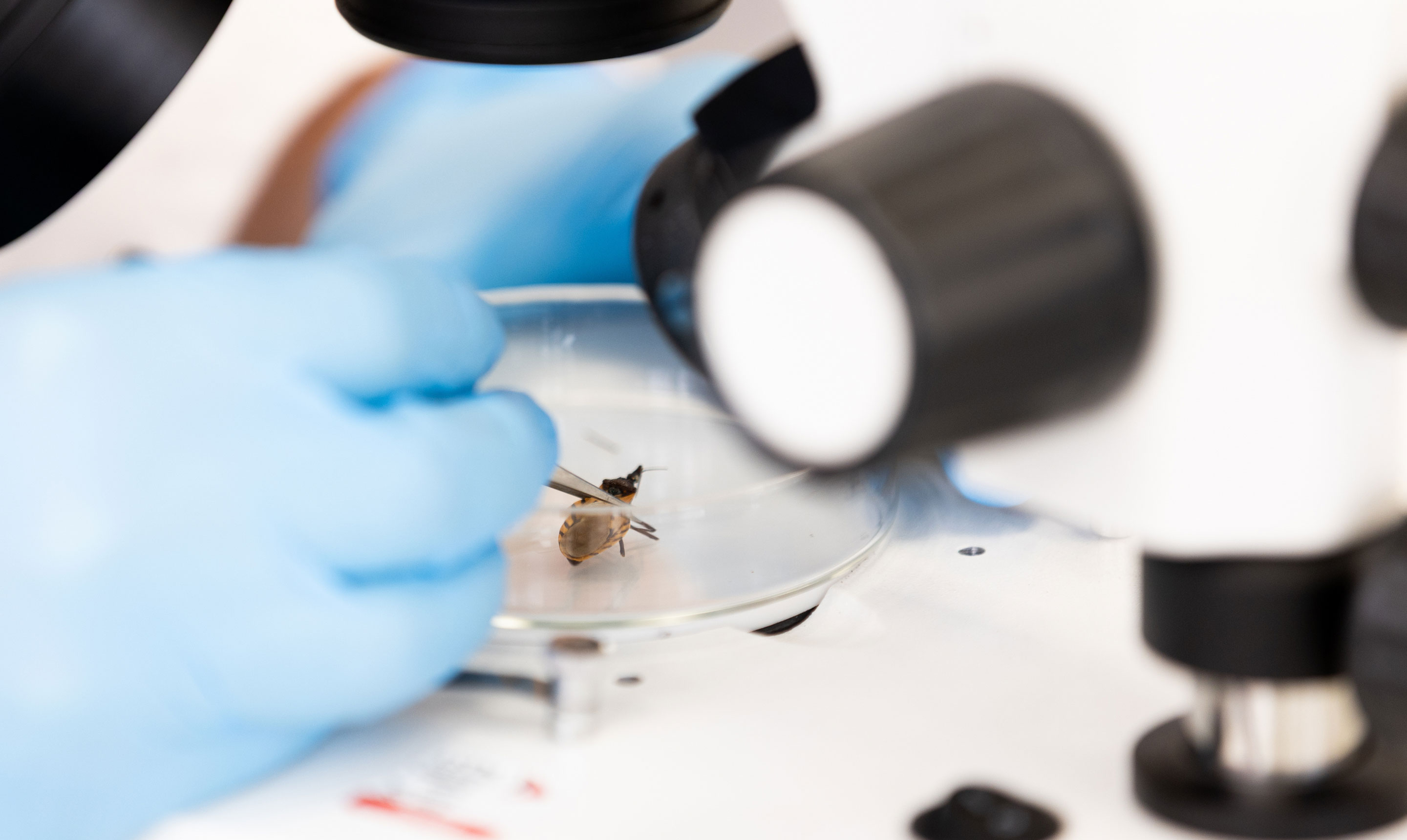
- Director of studies
- Dr Alexandra Juhasz
- Course type
- Master’s course
- Location
- Liverpool, UK
- Start date
- September 2027
- Mode of study
- Full time, on campus
- Duration
- One year
- Home fee
- TBC
- International fee
- TBC
Overview
Infectious diseases do not exist in isolation. Their emergence and spread are shaped by complex relationships between humans, animals, pathogens and the environments they share.
Our MSc One Health in Tropical and Infectious Disease explores these connections, bringing together the biological, ecological and environmental factors that influence infectious diseases. Drawing on LSTM’s internationally recognised expertise in parasitology, vector biology, microbial infectious diseases and world-leading snakebite research, you’ll develop a deep understanding of the biological, environmental and social factors that shape health and disease globally.
You’ll investigate how diseases emerge, spread and can be controlled, with a particular focus on tropical settings and communities where resources are limited. You’ll explore subjects including zoonotic diseases, which pass between animals and humans, vector-borne infections, climate change, food security, urbanization, antimicrobial resistance and emerging health threats. By learning from experts and partners working directly within these settings, you’ll gain the knowledge and skills to make a meaningful contribution to improving health outcomes worldwide.
The programme combines specialist scientific knowledge with practical laboratory, field and computational research skills. You’ll learn how to investigate infectious diseases, analyse scientific evidence and consider approaches to surveillance, prevention and control.
Taught by research-active specialists, the MSc also provides an opportunity to develop your own research interests through an independent project dissertation, undertaken in Liverpool or potentially overseas.
Who is this course for?
Our MSc is designed for recent graduates and experienced professionals who want to understand infectious diseases through the connections between human, animal and environmental health.
It is particularly relevant to people with backgrounds in:
- Biological and biomedical sciences.
- Medicine and veterinary medicine.
- Microbiology, parasitology, and arthropod vectors of pathogens.
- Zoology and related scientific disciplines.
- Environmental science and other relevant biological sciences.
The programme will appeal to those interested in infectious disease research, laboratory and field science, and understanding the factors that drive disease emergence, transmission and control.
It also welcomes eligible medical and veterinary students who want to undertake an intercalated master’s degree.
Whether you’re preparing for a research career, considering doctoral study or looking to develop your scientific expertise, the programme offers an opportunity to specialise in this growing field.
“Infectious diseases do not exist in isolation. Their emergence and spread are shaped by complex relationships between humans, animals, pathogens and the environments they share.”
Why study One Health at LSTM?


What will I learn?
The programme brings together One Health principles with the scientific study of infectious diseases and the methods used to investigate and control them.
You’ll explore:
- One Health and infectious diseases: Understand the connections between human, animal and environmental health, and how these relationships influence the emergence, spread and control of disease.
- Pathogen biology and host-pathogen interactions: Investigate the biology of disease-causing organisms, including how pathogens interact with their hosts and contribute to infection.
- Tropical, emerging and zoonotic diseases: Explore infectious and parasitic diseases affecting humans and animals, including diseases that pass between species and emerging threats to global health.
- Epidemiology, vectors and disease control: Understand how infectious diseases spread through populations and the roles of vectors, such as mosquitoes, in transmission. Explore approaches to surveillance, prevention and control.
- Molecular, immunological and computational approaches: Develop your understanding of scientific techniques used to investigate pathogens, immune responses and infectious diseases.
- Climate change and environmental health: Examine how environmental changes influence disease transmission, including the connections with biodiversity, ecosystems and changing patterns of infection.
- Research methods and practical investigation: Develop laboratory, field and data analysis skills, including research planning, scientific methods and the interpretation of findings.
- Contemporary tropical disease challenges: Explore important issues in tropical medicine and global health, including neglected tropical diseases, snakebite, and antimicrobial resistance.
Modules
A list of available modules will be added once they are confirmed.
The programme combines scientific learning with practical research experience.
You’ll develop knowledge of tropical and infectious diseases alongside skills in laboratory methods, field research and data analysis.
An important part of the MSc is an independent research project dissertation, giving you an opportunity to investigate a specialist research question and apply the methods you’ve learned.
Research may be undertaken in Liverpool or, where suitable opportunities and arrangements are available, through international research activities.
Further information about teaching, modules, assessments and the research project arrangements will be confirmed for September 2027 entry.
By the end of the programme, you should be better equipped to:
- Investigate infectious disease challenges using a One Health approach.
- Plan and conduct research in laboratory, field or data-based settings.
- Generate, manage and interpret scientific and epidemiological data.
- Evaluate evidence to inform disease surveillance, prevention and control.
- Apply ethical and professional standards when conducting research.
- Manage research activities and communicate scientific findings to specialist and wider audiences.
The MSc One Health in Tropical and Infectious Disease can support careers in infectious disease and global health research, particularly in areas connecting human, animal and environmental health.
Depending on your existing qualifications and experience, potential pathways include:
- Infectious disease research in universities and research institutes.
- Laboratory and field-based scientific research.
- Epidemiology and disease surveillance.
- Veterinary and public health research.
- Government agencies and international organisations working on infectious disease threats.
- Non-governmental organisations and industry involved in disease research, prevention and control.
The programme can also provide a foundation for doctoral study, including a PhD in infectious diseases, parasitology, microbiology, medical entomology, epidemiology or a related subject.
If you’re already working in a scientific or professional role, it can help you develop more specialist research and analytical skills.
Student Research Project
You’ll have the opportunity to choose from a wide range of research projects spanning LSTM’s diverse areas of expertise. Working closely with academic supervisors, you’ll explore potential topics, discuss research ideas, and shape your project to align with your interests, career goals and training needs, whether you’re building on existing knowledge or developing expertise in a new area.
The project selection process is designed to give you choice and flexibility. After discussing options with supervisors, you’ll rank your preferred projects, and every effort is made to match you with one of your top choices. A range of overseas research opportunities are also available and clearly highlighted within the project portfolio. Students interested in these projects can discuss them with supervisors before submitting their ranked preferences. With an extensive selection of both UK-based and international projects, students can look forward to undertaking research that is both academically rewarding and personally relevant, while gaining valuable experience in global health research settings.
Entry requirements


Fees and funding
Home fee (September 2027)
TBC
International fee (September 2027)
TBC

Financial support for UK students
We have scholarships, bursaries, discounts and loans available, established through generous donations from alumni, staff and friends and funding from within Liverpool School of Tropical Medicine.
Financial support for international students
We offer various scholarships for international students, particularly those from low- and middle-income countries. These include full or partial funding through programs like the LSTM Global Health Impact Scholarship and the LSTM Humanitarian Scholarship.

External funding
Scholarships, fellowships and grants are available from a range of funders and organisations. Any scholarship, studentship, fellowship or grant can be used as an alternative to, or part-funding of, an LSTM scholarship.
How to apply
You can apply for a course at any time throughout the year using our online application portal, MyLSTM. You will need to register for an account the first time you use it, or if you’ve already created an account, you can pick up where you left off by logging in directly to MyLSTM.
By registering for a MyLSTM account, you will be able to:
- Apply for courses at LSTM.
- Upload supporting documentation.
- Save your draft application.
- Accept an offer to study.
- Keep your account information up-to-date.
If you can’t access our online application form, please get in touch. Paper application forms are available on request.
Get study updates
Sign up for the latest on scholarships, application deadlines, events and new course launches. We’ll keep it relevant, and you can unsubscribe at any time.