Enhanced Mosquito Surveillance using Lidar
Enhanced Mosquito Surveillance using Lidar
2026 – 2030
The challenge
Mosquito surveillance forms a crucial component of vector control but is reliant on traditional entomological methods that are costly, laborious and inefficient. Emerging remote sensing technologies will revolutionize how we survey insects in their natural environment offering substantial cost and data benefits.
About the project
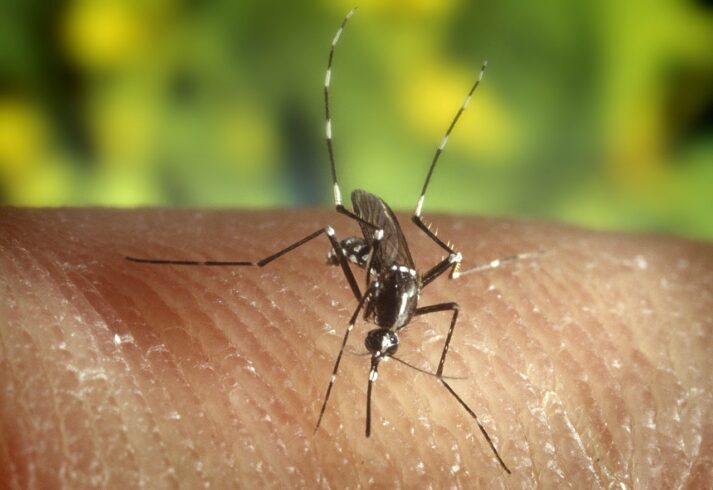
A new research project, led by Liverpool School of Tropical Medicine and Lund University in Sweden, will use the latest advances in optical remote sensing technology, known as entomological lidar, to detect and identify the most important endemic and invasive mosquito species in UK.
The technology could drastically improve insect monitoring, tracking flying insects in real time in their natural environment, something that cannot be done with traditional sampling methods.
The project aims to determine whether lidar can become a biomonitoring tool that will enhance entomological monitoring in the UK and support environmental and public health insect surveillance. As well as tracking the spread of invasive species, the technology could also help support biodiversity programmes, measure insect movement and livestock and agricultural pest control.
Our approach
We are testing Entomological LiDAR (Light Detection and Ranging) – a remote sensing system that uses an infrared laser beam to detect insects flying through it.
The technology can identify insects by analysing characteristics such as:
- Wing-beat frequency
- Size
- Colour
- Flight patterns
Unlike traditional trapping methods, LiDAR can monitor insects continuously without harming them and can record hundreds of thousands of observations each day.
Our impact
Insects play a vital role in ecosystems, but many species are declining. At the same time, climate change is increasing the risk that diseases transmitted by insects (e.g. mosquitos) could emerge in the UK.
Researchers need better tools to understand:
- Changes in insect populations and biodiversity
- How insect populations respond to environmental conditions
- Whether mosquito populations are increasing or spreading
Our partners
This work was supported by the Natural Environment Research Council NERC, grant number UKRI4322.
Project partner:
Team
- Principal Investigator: Dr Christopher Jones
- Programme Manager: Susie Crossman
- Research Assistant: Nadja Wipf
- Project Coordinator: Zena Parker
Related news