Laser technology to track and identify invasive mosquitoes in the UK
- News
30 April 2026
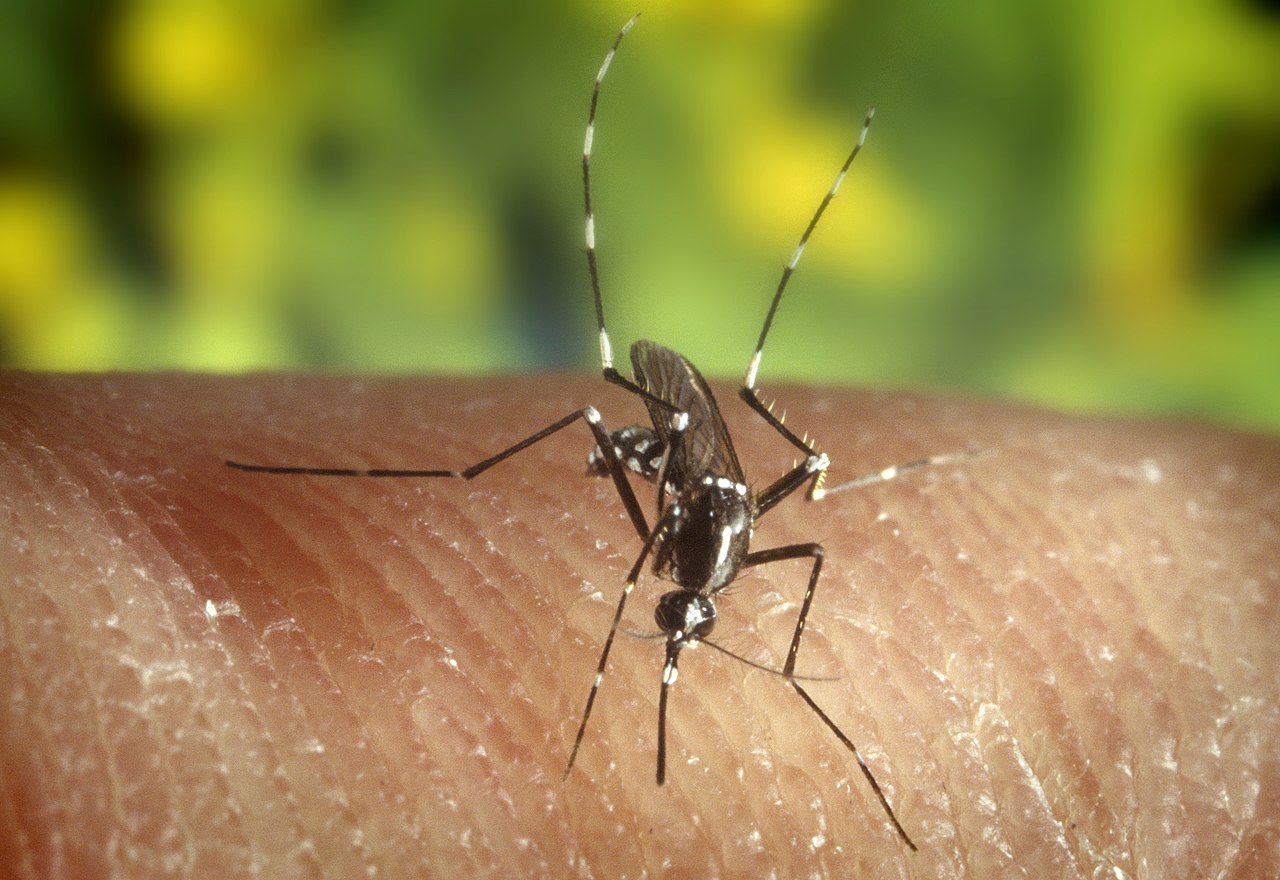
A cutting-edge laser system will be used for the first time in the UK to track and help identify invasive mosquito species that can carry nasty diseases.
Mosquito surveillance is an increasingly important environmental and public health priority in the UK, as climate change and international travel fuel the spread of invasive species across Europe.
For example, Aedes albopictus, a vector for diseases such as dengue, chikungunya, and Zika virus, has contributed to local outbreaks of dengue in Europe. This species is not established in the UK, though its eggs have been repeatedly detected in South East England in recent years.
A new research project, led by Liverpool School of Tropical Medicine and Lund University in Sweden, will use the latest advances in optical remote sensing technology, known as entomological lidar, to detect and identify the most important endemic and invasive mosquito species in UK.
The technology could drastically improve insect monitoring, tracking flying insects in real time in their natural environment, something that cannot be done with traditional sampling methods.
The project aims to determine whether lidar can become a biomonitoring tool that will enhance entomological monitoring in the UK and support environmental and public health insect surveillance. As well as tracking the spread of invasive species, the technology could also help support biodiversity programmes, measure insect movement and livestock and agricultural pest control.

Dr Chris Jones, Senior Lecturer in Vector Biology at LSTM and lead on the project, said: “The beauty of the lidar is that it collects data continuously, recording thousands of flying insects in a single day. Invasive mosquito surveillance is like looking for a needle in a haystack, so in this project we want to try and realise the potential of lidar to support invasive mosquito monitoring in the UK and elsewhere. We also believe that the lidar will uncover aspects of mosquito behaviour and ecology that are not observable using traditional insect sampling. That is really exciting and potentially transformative for mosquito control research.”
Entomological lidar, pioneered by researchers at Lund University, can detect hundreds of thousands of insects per day at ground-level, using information gathered from backscattered light as insects fly across an infrared laser hundreds of metres long.
Insects ranging from bees, moths and mosquitoes can be identified based on wing-beat frequency, size and colour.
Researchers will use a new compact and 3D-printed version of the entomological lidar system designed specifically for ecologists. This will be the first time lidar has been tested for mosquito monitoring in the UK.
They will first collect signals from endemic and non-endemic UK mosquito species housed in specialist insectaries at LSTM, using the data to train AI models that will be tested with the technology at a field site in North West England with known mosquito species diversity.
The team will then continuously collect three months of observations in a UK wetland to estimate emerging mosquito population sizes and microclimatic drivers with unprecedented accuracy.
It is hoped that this will demonstrate the feasibility of the entomological lidar system as a biomonitoring tool across a range of different habitats, which can then be rolled out further in priority surveillance areas.