Whole-genome sequencing study reveals how antibiotic-resistant bacteria may spread through rural communities in Malawi
- News
18 November 2026

A new study led by researchers at Liverpool School of Tropical Medicine (LSTM) has shed light on how antibiotic-resistant bacteria spread within rural communities in Malawi.
Escherichia coli is internationally recognised as one of the most serious antimicrobial-resistant (AMR) bacterial threats to global health and it disproportionately affects low resource settings like sub-Saharan Africa.
Cases of infection with drug-resistant E. coli are increasing and few new antibiotics are coming through the drug discovery pipeline so understanding transmission networks is vital to reduce the spread.
Published in Nature Communications, LSTM’s study investigated how related the resistant strains of E. coli were within two rural settings in Malawi.
Routes of transmission
Dr Angus More O’Ferrall, lead author, said: “This is the first study to map different strains of E. coli across households in rural areas of Malawi: there’s a huge knowledge gap in this area.
“Our findings show that transmission networks often involve people living in neighbouring households. Although the exact routes of transmission remain unresolved, contaminated water sources likely play a role.
“We also found links between strains circulating in rural villages and those previously detected in urban areas of the country.
“We know that sanitation infrastructures in these communities are responsible for spreading disease and urgently need to be improved, and we think that has a direct impact on the transmission of E. coli.
“This exacerbates the AMR crisis, highlighting the importance of a more joined-up approach to disease prevention.”
Study methods
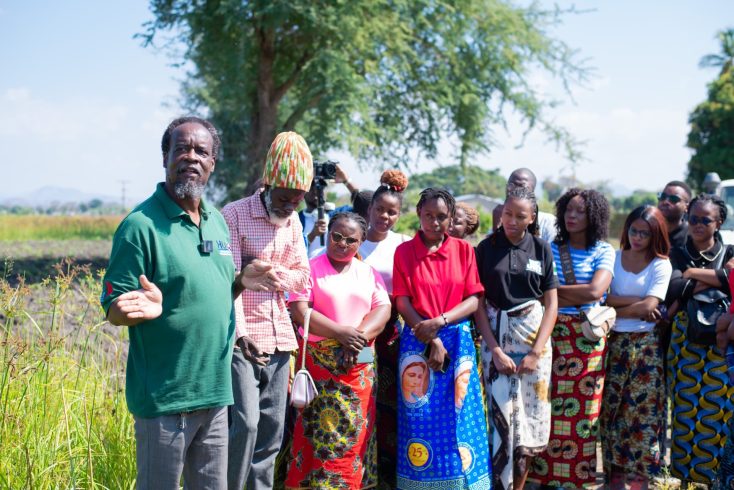
The research team, a multi-disciplinary collaboration between LSTM and Malawi Liverpool Wellcome Programme (MLW), studied stool samples collected from 211 people living in two rural villages over one year.
They investigated how strains of bacteria found in the samples were distributed across households and communities: whole-genome sequencing analysed the genetic makeup of the bacteria and household mapping identified potential transmission networks.
Findings also highlighted the importance of a ‘One Health’ approach that considers human, animal and environmental surveillance alongside improved sanitation infrastructure to help reduce transmission and tackle the growing threat of AMR.
Integration with HUGS
The study was integrated within the established LSTM- and MLW-led Hybridisation in UroGenital Schistosomiasis (HUGS) research programme which investigated water-borne parasite transmission in rural Malawi.
Professor Janelisa Musaya, Associate Director at MLW and the organisation’s lead for the HUGS programme, said: “This study shows that understanding disease in Malawi requires us to look beyond individual pathogens to the environments in which communities live.
“It strengthens the case for linking disease control with investment in water, sanitation and environmental health. The challenge now is to turn this evidence into coordinated policy and action that benefits the communities most affected.”
Professor Russell Stothard, LSTM lead for HUGS, added: “Our study, conducted across households where the water-borne parasitic disease schistosomiasis is also endemic, very clearly highlights the consequences of currently unmet needs in local water hygiene and domestic sanitation.
“Improving these infrastructures here, and elsewhere, is required to promote the better wellbeing of all in future.”
Professor Adam Roberts, senior author of the study, said: “This work was only possible through the collaborations that existed between microbiologists and parasitologists and demonstrates the benefits of embedding one study within another to reveal multilayered information that can help fight against global health threats.”
Infectious diseases expertise
Liverpool School of Tropical Medicine is home to a leading national and international research and teaching department with a focus on translational research of tropical infectious diseases.
Research covers all major human infections to address unmet global health challenges, with a focus on solutions with the potential to make a material impact on the health and wellbeing of people from resource poor settings.
Courses include MSc Tropical Disease Biology and MSc One Health in Tropical and Infectious Disease.