LSTM secures funding to strengthen One Health training and tick-borne disease research
- News
26 June 2026
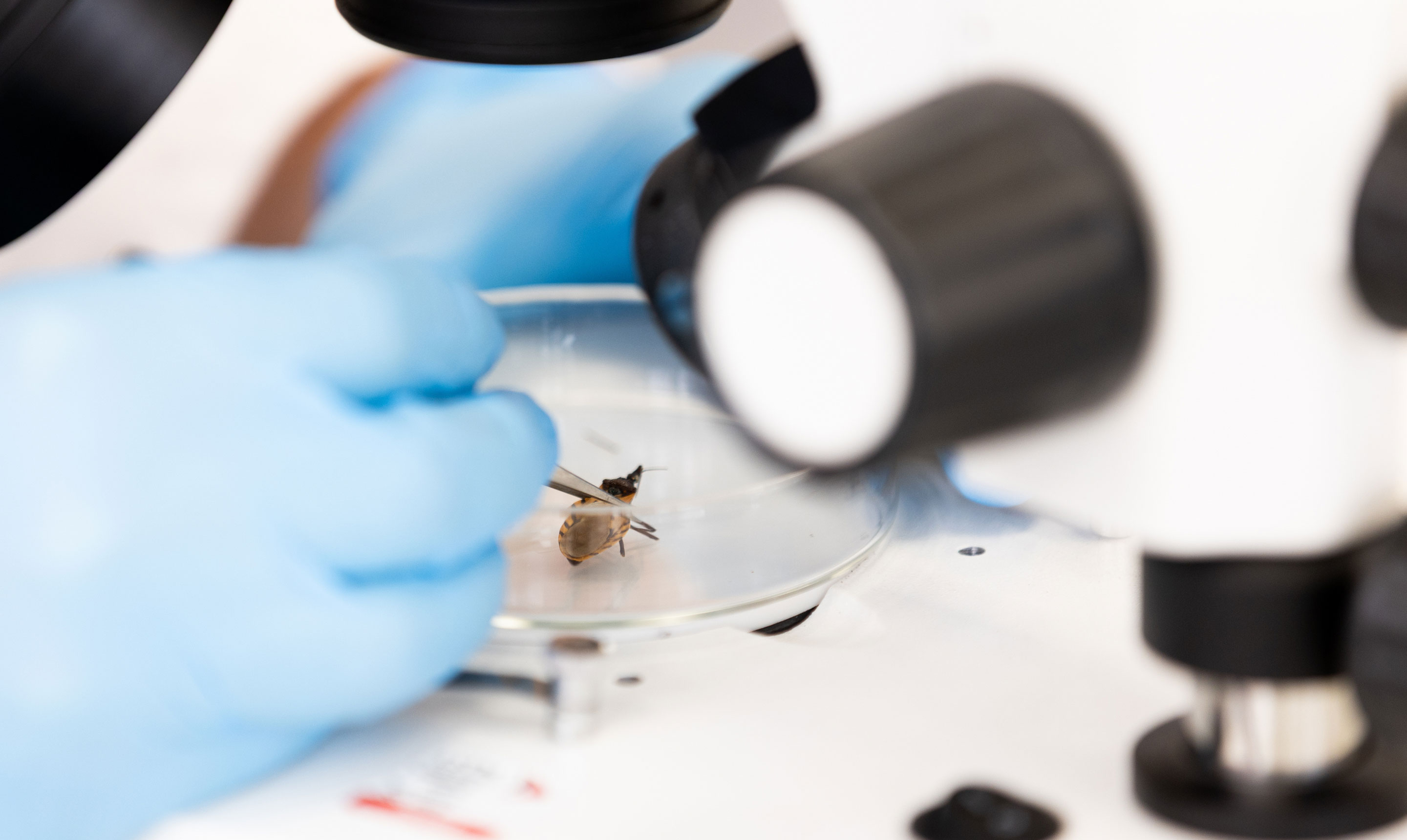
Students at Liverpool School of Tropical Medicine (LSTM) will gain hands-on experience in fieldwork, molecular diagnostics and disease surveillance thanks to new funding supporting a research-led educational programme focused on tick-borne diseases.
The three-year award from ESCCAP UK & Ireland will support the integration of field and laboratory research throughout LSTM’s Master’s programmes One Health in Tropical Disease and Tropical Disease Biology, allowing students to develop practical skills while contributing to surveillance of tick-borne pathogens in the UK.
Led by Dr Alexandra Juhász, Postdoctoral Researcher and Programme Director for the MSc One Health in Tropical Disease, the project will create a structured learning pathway that takes students from field-based tick collection through to laboratory analysis and epidemiological interpretation.
Students will participate in tick sampling activities, learn molecular techniques including DNA extraction and PCR, and analyse real-world data generated through the project. The work will also produce pilot research data on the prevalence and diversity of tick-borne pathogens in the UK, supporting MSc dissertation projects and laying the groundwork for future research collaborations and funding opportunities.
Dr Alexandra Juhász said: “Tick-borne diseases are an increasing challenge for both human and animal health, driven by environmental change and shifting patterns of disease transmission.
“This funding will allow our students to gain practical experience across the entire research process, from field sampling to molecular analysis and data interpretation, while contributing to our understanding of tick-borne pathogens in the UK.
“By embedding research directly within teaching, we are creating opportunities for students to develop the skills needed to address complex public health challenges through a One Health approach.”
The project will be delivered across multiple modules within the MSc programmes, ensuring students progressively build expertise in vector biology, molecular epidemiology and disease surveillance throughout the academic year.
Alongside enhancing teaching and training, the initiative will generate valuable pilot data that can inform future research into tick-borne diseases and support the development of the next generation of researchers and public health professionals.
Related courses

MSc One Health in Tropical and Infectious Disease
Explore the connections between human, animal and environmental health and their role in tackling tropical disease.
View course