Long-term study reveals hidden threat of schistosomiasis in endangered chimpanzees
- News
24 August 2026
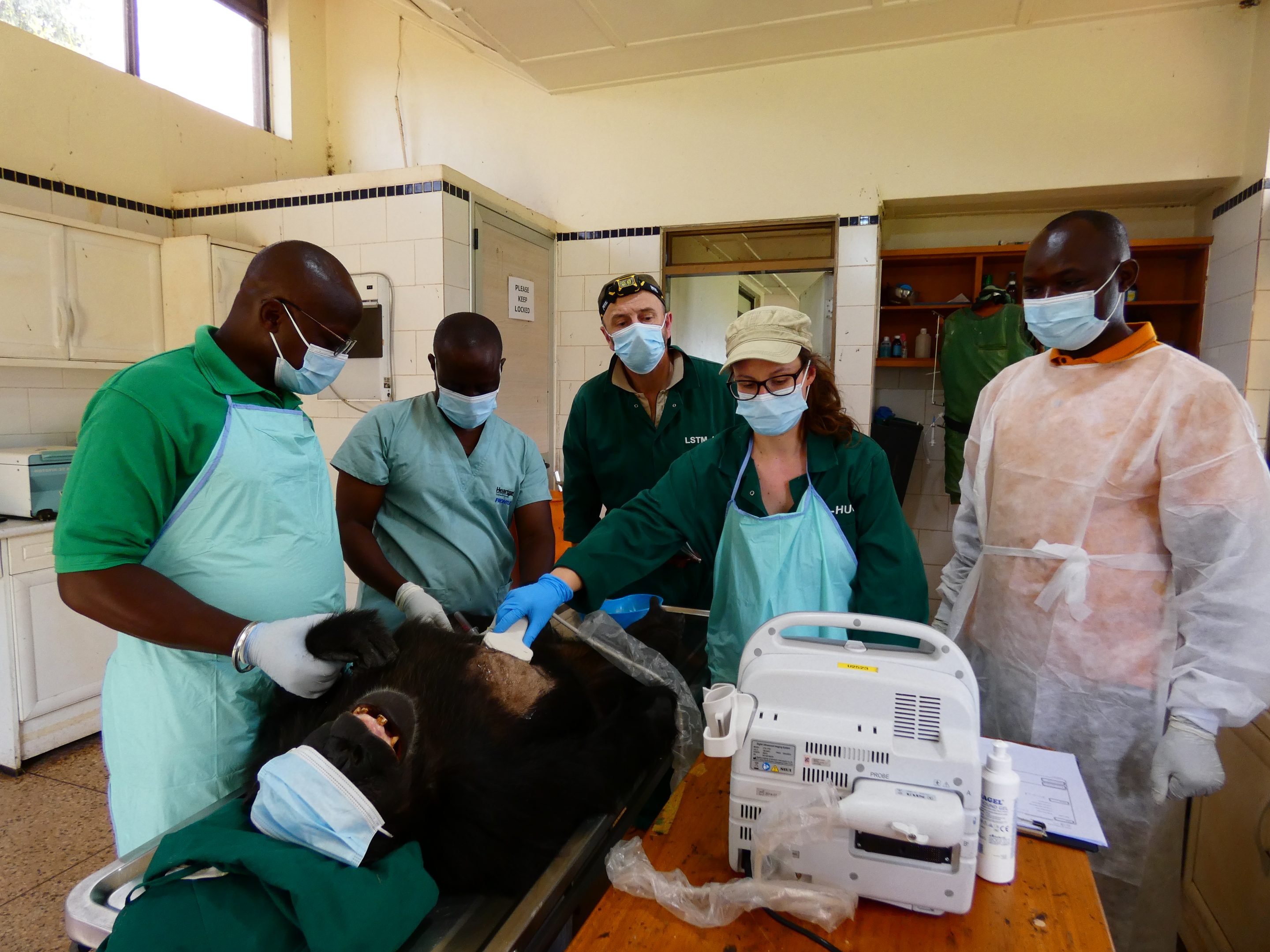
A 12-year study of rescued chimpanzees within the Ngamba Island Chimpanzee Sanctuary (NICS) in Uganda has revealed persistent intestinal schistosomiasis infections, highlighting the need for long-term disease surveillance to protect endangered wildlife.
The study, led by researchers at Liverpool School of Tropical Medicine (LSTM) and international collaborators, followed almost 50 chimpanzees living on Ngamba Island in Lake Victoria where intestinal schistosomiasis is highly endemic. The disease is transmitted by infected snails along the shoreline, presenting an ongoing health challenge for the chimpanzees and the people who care for them.
The chimpanzees are treated annually with praziquantel, although this reduced infection, it was not enough to prevent ongoing transmission or progressive liver disease. Ultrasound examinations revealed worsening liver fibrosis in several animals, including advanced “pipe-stem” fibrosis, a severe and irreversible form of liver damage more commonly associated with long-standing human infection.
The findings suggest that relying on treatment alone is unlikely to fully protect animals living in endemic areas. Instead, a One Health approach providing more frequent treatment, regular health monitoring and environmental management are needed to safeguard their long-term welfare.
The work also reinforces lessons from human schistosomiasis control programmes around Lake Victoria, where repeated reinfection continues to limit progress despite widespread treatment campaigns. The researchers hope their findings will encourage greater disease surveillance in chimpanzee sanctuaries across Africa and help inform future conservation and veterinary management strategies.
Dr Alexandra Juhász, lead author of the study and Director of LSTM’s MSc One Health in Tropical Disease, said: “Chimpanzees are a prominent endangered species globally, so maintaining their health is a conservation priority. We found that annual praziquantel treatment alone is not enough within an environment where animals are constantly exposed to infected water. More frequent treatment, alongside regular monitoring, could help prevent the severe fibrotic liver damage we observed.
“Our study also demonstrates the value of a One Health approach. The same parasite infects both humans and chimpanzees, while infected snails maintain transmission in the environment. Understanding how these systems interact helps us protect wildlife while improving our understanding of human schistosomiasis more broadly.”
Schistosomiasis affects around 250 million people worldwide, predominantly across sub-Saharan Africa, but the disease also infects non-human primates. Because chimpanzees and humans can both carry Schistosoma mansoni, the findings demonstrate the importance of a One Health approach that considers the health of people, wildlife and the shared environment.
The NICS was founded 30 years ago by Dr Jane Goodall to keep a troop of around 50 primates safe on the isolated Ngamba island. The sanctuary is a global leader in chimpanzee conservation and a prominent member of the Pan African Sanctuary Alliance (PASA), the results of this project will be shared with other animal sanctuaries to improve conservation efforts.
Professor Russell Stothard, Professor of Medical Parasitology at LSTM and senior author of the study, said: “This is the first time anywhere in the world that schistosomiasis infections have been followed in chimpanzees over such a long period. The results provide insights that will help us protect both animals and the millions of humans around the world affected by schistosomiasis.”
The researchers used multiple diagnostic techniques on the chimpanzees, including stool microscopy, rapid urine antigen testing, parasite DNA analysis and liver ultrasound. While traditional stool testing detected infection in just 4% of chimpanzees, urine antigen testing identified evidence of infection in more than one-third of the animals, demonstrating that conventional diagnostic methods can substantially underestimate the true burden of disease.
The study was conducted by researchers from LSTM, Semmelweis University, Ngamba Island Chimpanzee Sanctuary, the Uganda Ministry of Health and other partners in Uganda.