Herpetarium
From venom extraction and laboratory research to partnerships that improve access to antivenom, we turn specialist care and science into real-world impact.
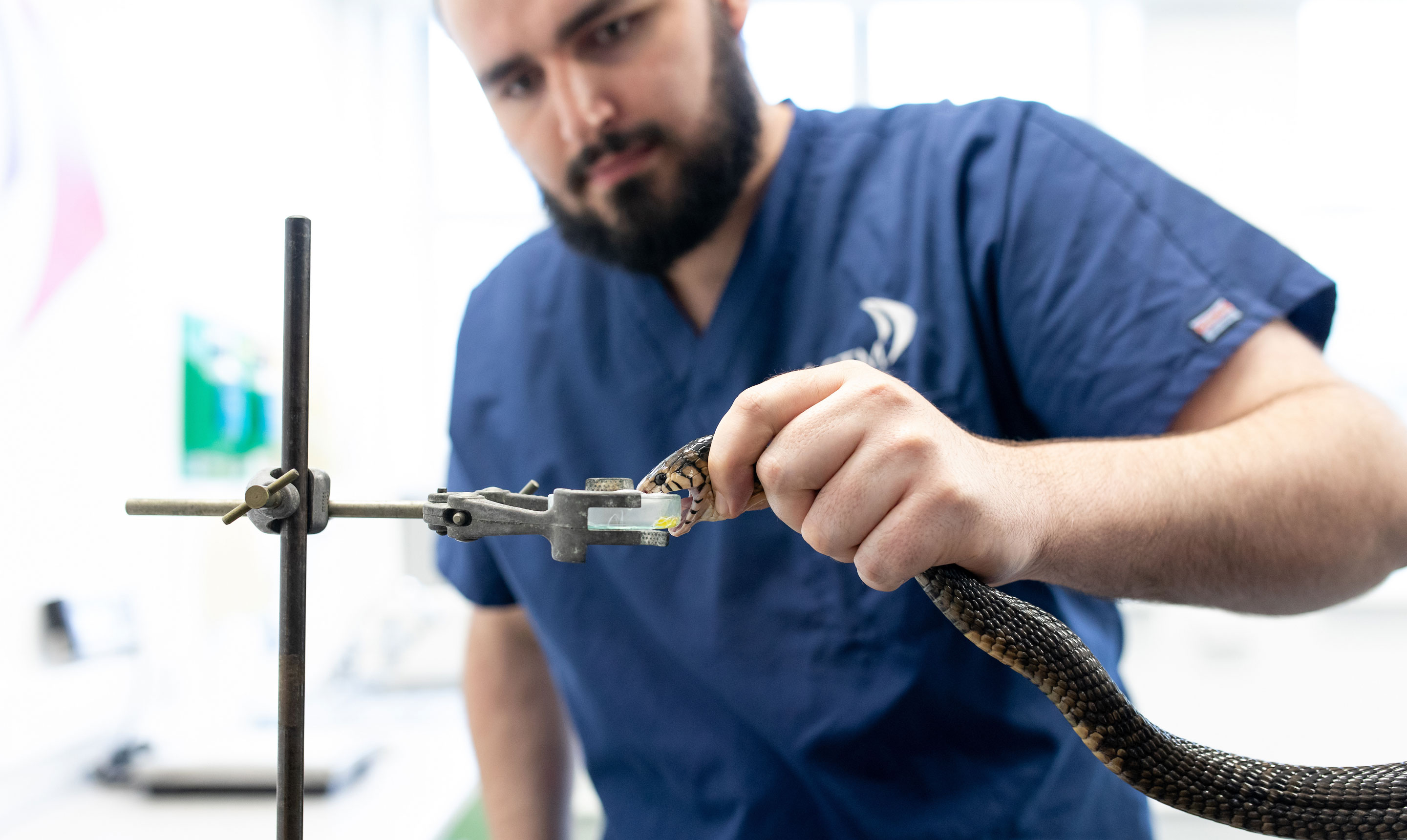
From specialist animal care and venom extraction to professional training and education, LSTM’s Herpetarium is a unique facility where expertise in venomous snakes supports global research, teaching and public engagement.
Located in Liverpool, the Herpetarium at the Liverpool School of Tropical Medicine (LSTM) is the UK’s only Home Office-accredited animal research facility dedicated to venomous snakes. Managed by a highly skilled team of specialist staff, the facility supports research, education, knowledge exchange and professional training focused on venomous species and snakebite.
The Herpetarium houses a diverse collection of venomous snakes representing more than 50 species from around the world, ranging from European vipers to some of the most medically important snakes found in Africa, Asia, and North and South America. The animals are cared for to the highest standards by a specialist team led by Herpetarium Manager Edouard Crittenden, whose expertise in venomous reptile husbandry, training and field engagement underpins the operation of the facility.
Working alongside Edd is internationally recognised herpetologist Paul Rowley, whose decades of experience in venomous snake research and husbandry have helped establish the Herpetarium as one of the most distinctive facilities of its kind in Europe. The day-to-day management of the collection and venom extraction programme is supported by technician and herpetologist Zachary Holland, who plays a key role in maintaining the collection and producing high-quality venom samples for research.
Together, the team maintain a specialist facility that is widely recognised as a unique asset for LSTM and the wider global research community.
The facility’s role
The Herpetarium plays a vital role in supporting LSTM’s global research programmes. Researchers from the Centre for Snakebite Research and Interventions (CSRI), alongside international collaborators, are able to access carefully curated venom and tissue samples produced by the facility.
Centre for Snakebite Research & Interventions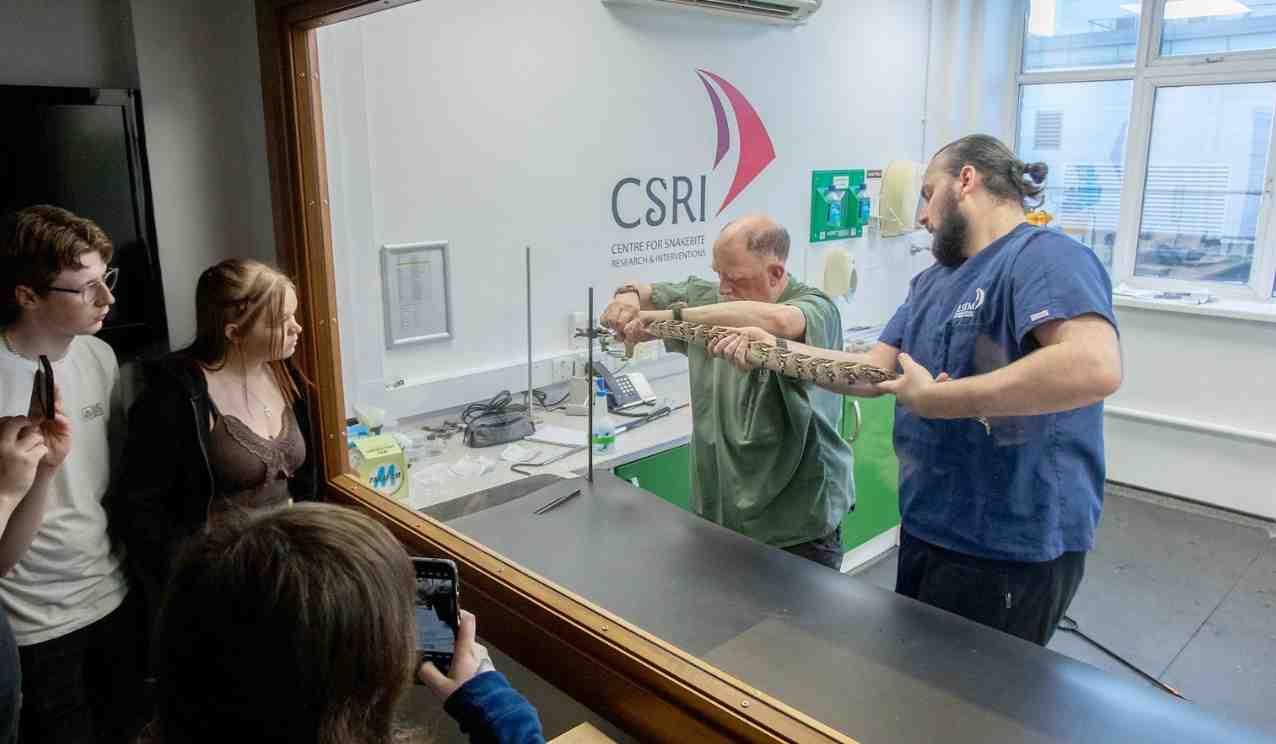
A unique resource for research
Snake venom varies significantly between species and even between populations of the same species from different regions. Understanding these differences is essential for developing effective diagnostics, treatments and antivenoms for snakebite.
To support this work, the Herpetarium team carry out highly controlled venom extraction procedures. Samples are rapidly preserved, freeze-dried and stored under strict conditions to maintain their biological integrity. These “gold-standard” venom samples underpin a wide range of research activities, from understanding venom evolution and toxicity to developing new therapeutics and next-generation antivenoms.
This work contributes to global efforts to tackle Snakebite Envenoming, recognised by the World Health Organization as a Neglected Tropical Disease affecting some of the world’s most vulnerable communities.
Our collection
The Herpetarium maintains one of the UK’s most specialised collections of venomous snakes. While the collection supports a wide range of research and educational activities, there is a particular focus on medically important species.
These include:
- Vipers such as 6 species of the deadliest snakes to humans, saw-scaled vipers (Echis species), “biological land mine” puff adders (Bitis arietans) and the feared Terciopelo and Fer-de-Lance (Bothrops asper and atrox)
- Elapids including all of the notorious mamba family (Dendroaspis) like Black mamba (D polylepis) and both Green mambas (D angusticeps and viridis)
- 10 species of iconic cobras (Naja species), featuring both spitting and non-spitting varieties from Africa and Asia, as well as the unique outgroup of spitting Rinkhals (Hemachatus haemachatus)
- Alongside these medically important snakes, the collection also includes a number of unusual and rarely maintained species that contribute to comparative research and education. Due to the unique nature of the facility and skillset of the team, the Herpetarium routinely takes in and houses venomous animals found or seized across the UK, including scorpions!
Education, training and knowledge exchange
Beyond research, the Herpetarium plays an important role in education and professional training at LSTM.
The facility supports practical teaching within LSTM’s postgraduate programmes and provides specialist training for veterinarians, laboratory professionals and other specialist audiences in the safe management and handling of reptiles.
Members of the team also deliver training internationally, sharing expertise with zoological collections, conservation organisations and research institutions working with venomous species.
These activities contribute to capacity building in regions where snakebite is most prevalent and support best practice in animal welfare and venom research.
Public engagement and outreach
The Herpetarium is an important platform for STEM engagement and public understanding of science.
Over the past decade, the team has welcomed thousands of visitors to the facility, including school groups, university students, healthcare professionals, research funders and international partners.
Through tours, demonstrations and media engagement, the team help communicate the science behind venom research and the global importance of tackling snakebite.
By connecting specialist research with education, training and public engagement, the Herpetarium demonstrates how expert animal care and scientific collaboration can contribute to solving real-world global health challenges.