LSTM News
Explore by type options
Select by theme options

Learning from the Global South to Prevent Gender-Based Violence

Blog

14 July 2026

One in three women worldwide will experience physical or sexual violence during their lifetime. Gender-based violence (GBV) affects every country and every community—and Merseyside is no exception.

Across the region, leaders are stepping up efforts to tackle violence against women and girls. Last month, Emer Coffey from Public Health Liverpool helped launch The Health of Women in Liverpool Strategy, developed through extensive public consultation. The strategy highlights that “violence against women and girls, including sexual and domestic violence, was consistently described as having a significant and lasting impact on physical and mental health.”

At the same time, Hazel Snell, recently inaugurated as High Sheriff of Merseyside, has made tackling violence against women and girls the central theme of her year in office. Recognising the scale of the challenge, Hazel emphasised the importance of prioritising actions that are backed by strong evidence.

This raised an important question: what can Liverpool learn from the rest of the world?

Some of the strongest evidence on preventing violence against women and girls comes from the Global South, where researchers, communities and policymakers have developed and rigorously evaluated programmes that stop violence before it starts.

One example is the What Works to Prevent Violence: Impact at Scale programme, a seven-year initiative funded by the UK’s Foreign, Commonwealth and Development Office (FCDO). Building on evidence generated largely in low- and middle-income countries, the programme has demonstrated that well-designed prevention interventions can reduce violence by up to 50% within two to three years. This evidence is now informing policy and practice internationally.

FCDO also supports All In: Global Leaders for Ending Gender-Based Violence, a partnership bringing together leaders from around the world to accelerate evidence-based prevention. More recently, Foreign Secretary Yvette Cooper launched the International Coalition to End Violence against Women and Girls, reinforcing the UK’s commitment to global collaboration on prevention.

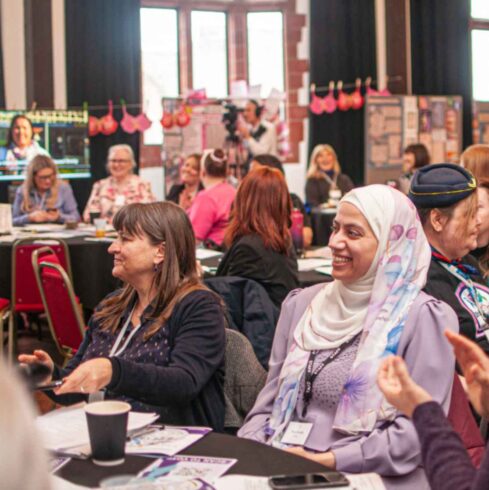
Last week, Sally Theobald, Professor of Social Science and International Health at LSTM and FCDO Senior Research Fellow in Gender, hosted the FCDO Education and Gender Inclusion Research Team in Liverpool. As part of this we held a learning event brought together colleagues from FCDO, Emer Coffey, Hazel Snell and Benedetta Musillo, who leads Gender Inclusion within FCDO’s Research and Analysis Directorate.
Bene shared the growing body of international evidence demonstrating that violence is preventable and that action must begin long before harm occurs. She highlighted four ingredients that consistently underpin successful prevention programmes:

• Challenging harmful gender norms;
• Using participatory approaches that engage communities;
• Involving the wider ecosystem, including families, schools and community leaders; and
• Ensuring an intensity and longevity of interventions.

Participants discussed the importance of starting early, with schools providing one of the most powerful settings for prevention. One example is The Good School Toolkit SASA! programme, first developed in Uganda and now adapted in more than 30 countries. Working with communities, parents, teachers and religious leaders, SASA! has been shown to reduce women’s risk of experiencing physical violence from male partners by more than 50% within two years.

The discussion also recognised that gender inequality does not exist in isolation. It intersects with disability, poverty and other forms of disadvantage, meaning prevention requires coordinated action across sectors. Participants explored how applying a stronger sex and gender lens to existing policies and data can reveal inequalities that too often remain hidden. They also considered emerging challenges, including technology-facilitated gender-based violence, where new evidence and innovative responses will be essential.

Reflecting on the event, Professor Sally Theobold emphasised the importance of these learnings; “Prevention is about systems, not individual projects and we need to intervene before harm escalates. Some of the world’s most influential evidence on preventing gender-based violence has been generated in the Global South with wider lessons for the Global North. We all need to work together to address and eradicate Gender Based Violence.”