Lok Ber Bedo: A storytelling research project with young people affected by conflict in Acholi sub-region, northern Uganda
Lok Ber Bedo: A storytelling research project with young people affected by conflict in Acholi sub-region, northern Uganda
The challenge
Children and adolescents across the Acholi sub-region experienced severe vulnerabilities including abduction, violence, and mass displacement during the prolonged conflict in northern Uganda (1986-2006).
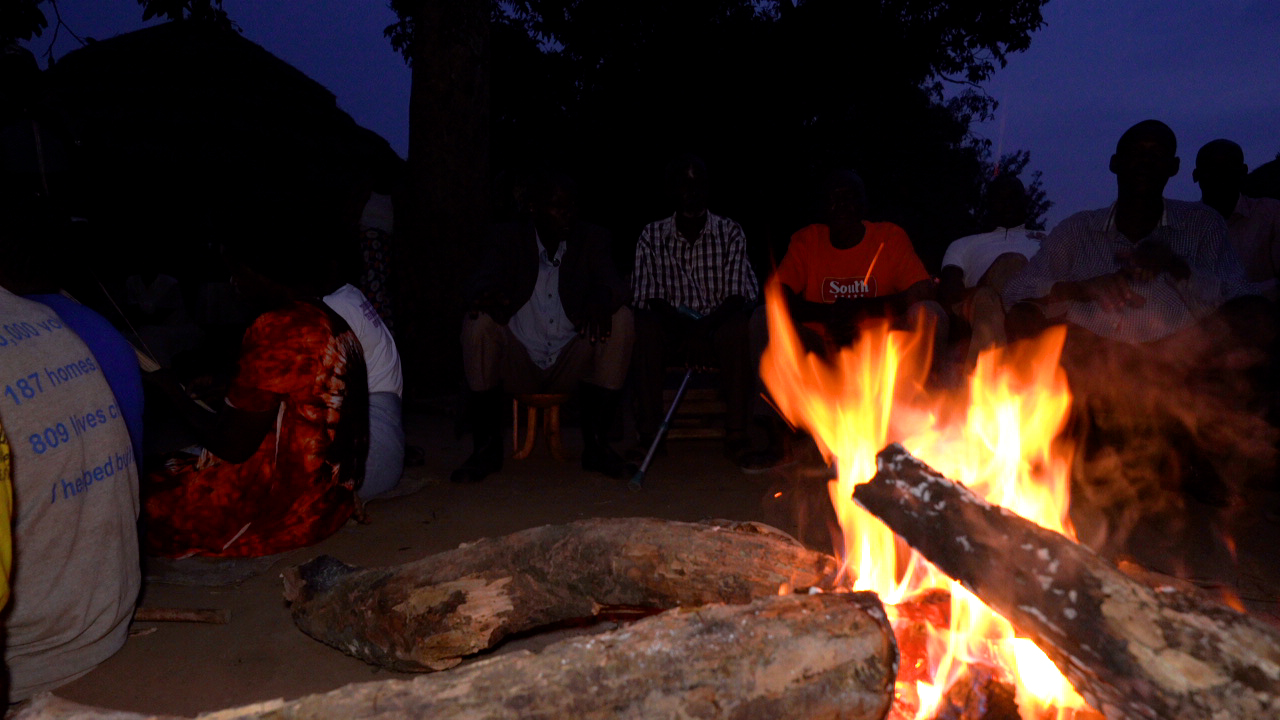
Traditionally, inter-generational storytelling gatherings known as wang oo served as the primary educational space for the Acholi people, carrying forward core values like ber bedo — a wholesome state of being well. The conflict severely disrupted this practice; entire generations missed out on vital education on their cultural identity, heritage and mechanisms most essential to healing and connection. Young people in Acholi sub-region today face a mix of challenges, such as poverty, unemployment, harmful alcohol use, and gender-based violence, which leave genuine well-being out of reach for many. Culturally grounded solutions are urgently needed to foster real recovery and community cohesion.
About the project
Lok Ber Bedo is a groundbreaking participatory action research project led in partnership by Liverpool School of Tropical Medicine and Refugee Law Project at the School of Law, Makerere University. We partnered with 112 conflict-affected young people across four youth groups in Kitgumdistrict in northern Uganda. The project received vital funding from the British Academy’s Knowledge Frontiers programme to support this international, interdisciplinary research partnership.
Our study explores how purposeful storytelling can foster healing, build trust, and promote well-being. We empower young people to take collective action to address the challenges facing their communities. This approach fundamentally repositions youth from being subjects of a study to acting as active co-researchers who drive the agenda.
Our strategies and approaches
Equitable research partnerships
Our team shifted away from traditional research by prioritising equitable partnerships and shared values of mutual respect, trust, and active inclusivity. Young people acted as co-researchers, with their roles and expectations formally established through Memoranda of Understanding which ensured that youth groups genuinely owned the research and its outcomes.
Reviving purposeful storytelling
We centred our methodological approach on reviving ododo (storytelling) for education, dialogue, reflection and entertainment. Youth groups led and recorded their own weekly storytelling and listening sessions over the course of the study. They used life histories, folk tales, songs, and poems to foster dialogue on complex themes such as identity, culture, livelihoods, and relationships.
Creative community action
We used storytelling as a direct springboard for tangible community action to address different challenges identified by participating youth groups. They received a financial package and training in forum theatre to design their own outreach programs. Through creative methods, radio talk shows, and community charity work, youth actively sensitised their peers on identified challenges like early marriage, school dropouts, and domestic violence.
Key findings and impact
Emotional connection and healing
Our guided storytelling framework, accompanied by mental health training and counselling, created psychologically safe environments for meaning making and recovery. Storytelling fostered deep connections, understanding, and unity among the participants. Peer dialogue and supporthelped them cope with stress, anxiety, and the haunting memories of past trauma. Lok ber bedo promoted emotional healing among participants and cultivated a renewed sense of hope for their futures.
Practical learning and problem-solving
We validated that youth-led storytelling enabled practical learning and profound reflection. Participants successfully built self-efficacy, critical thinking, and problem-solving skills over the course of regular storytelling and reflection sessions. They utilized their shared narratives to develop effective coping strategies and community sensitisation methods.
Empowering youth leadership
The confidence built around the fireplace translated directly into sustained community leadership. By translating their findings into original songs, poems, and community initiatives, the youth elevated themselves as respected agents of change. Our teams achieved a disruption of traditional power dynamics, successfully bridging the gap between generations and empowering marginalised voices.
Find out more from our learning report
- Reclaiming Narratives,Transforming Communities: Lok Ber Bedo research in Kitgum district (PDF)
- Yenyo onyo miyo dwon odoco ki kelo aloka loka ikin paci i Kitgum: Kweda me Lok Ber Bedo (PDF)
Our partners
- Refugee Law Project (RLP), School of Law, Makerere University, Uganda
- RLP’s National Memory and Peace Documentation Centre (NMPDC), Kitgum
- Namukora Integrated Youth Association
- Ribe Aye Teko (Unity is strength) Youth Group
- Tam Pi Waa (Think about us) Youth Group
- Wan Acel (Together we are one) Youth Group
The project lead at LSTM is Dr Beate Ringwald.
This project is funded by the British Academy’s Knowledge Frontiers: International Interdisciplinary Research Programme.