Dr Eric Lucas receives prestigious Springboard funding for genetic insecticide resistance project
- News
16 April 2026
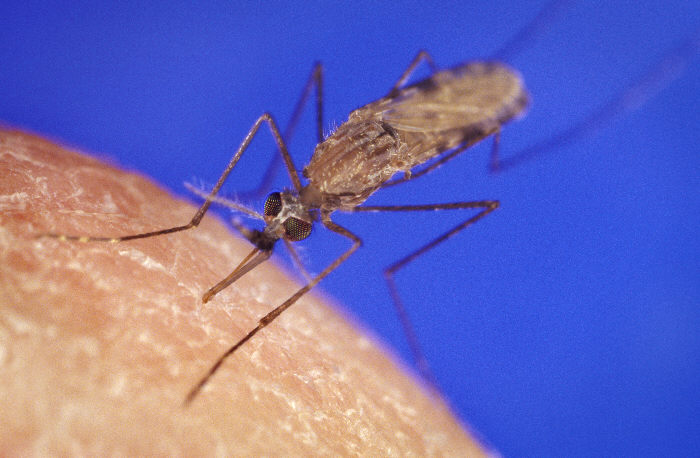
Vector biologist Dr Eric Lucas has been awarded a prestigious grant by the Academy of Medical Sciences to better understand the genetic basis of insecticide resistance in malaria mosquitoes.
The Academy’s flagship Springboard programme supports curiosity-driven, discovery-stage research – the foundational science that underpins future treatments and interventions.
The £125,000 awards support researchers to take their first steps as independent group leaders, testing bold ideas with the potential to improve lives, reduce health inequalities and strengthen the UK’s long-term research base.
In the face of widespread evolution of insecticide resistance in malaria mosquitoes, malaria control programmes need to make informed choices on the best insecticides to use.
By understanding the genetic basis of resistance, genetic tools can be developed to screen mosquito populations and identify the best insecticides to use.
Dr Lucas will use innovative CRISPR gene editing techniques to better understand how a gene known as Cyp9k1 in the malaria mosquito species Anopheles gambiae contributes to insecticide resistance.
Copy number variants, where the number of copies of a gene in the genome is increased, are often found in genes that break down insecticides, and are a key mechanism of resistance. Such variants in the Cyp9k1 gene have been identified and are spreading in the field, but it is not currently known what role they are playing in increased resistance.
The new project will use CRISPR to insert and remove Cyp9k1 copy number variants in colony mosquitoes, and compare the levels of resistance against a wide range of insecticides, to finally determine the role that they play in resistance and understand the recent rapid spread of these mutations.
Dr Lucas, Lecturer in Vector Biology at Liverpool School of Tropical Medicine, said: “I’m really excited to unpick the role of Cyp9k1 duplications in insecticide resistance. This Springboard award is a great opportunity to understand the intriguing evolutionary dynamics that we’ve been seeing, and to build better tools for monitoring resistance in a system with such huge health implications.”
Dr Lucas is one of 55 early career researchers from across the UK to be supported by the award, following in the footsteps of Dr Rosie Steege who was backed last year for a project on climate change.
With support from the UK Government’s Department for Science, Innovation and Technology, Wellcome and the British Heart Foundation, this year’s awards span the full breadth of biomedical and health research. Together, these projects aim to help people to live healthier lives, reduce health inequalities and strengthen the UK’s ability to prevent and respond to future health emergencies.
Professor James Naismith FRS FRSE FMedSci, Vice President (Non-Clinical) at the Academy of Medical Sciences, said: “The transition to research leadership is one of the most challenging stages in a research career, yet it is also when creativity is often at its strongest. Springboard invests in people at the moment when bold ideas begin to take shape, providing the freedom, confidence and backing researchers need to strike out on their own and ask big questions. The projects announced today show the impact this approach can have – demonstrating how early support can translate into meaningful benefits for patients, communities and the wider health system.”
UK Science Minister Lord Vallance FMedSci said: “To tackle cruel diseases like Alzheimer’s, Parkinson’s and chronic pain, and ultimately save lives, we must help researchers to take their ambitious discovery-stage work to the next level. This support is backing researchers at a stage where attracting commercial investment can be a challenge and builds on the Government’s record investment in research – unlocking more discoveries that benefit people across the UK and beyond.”